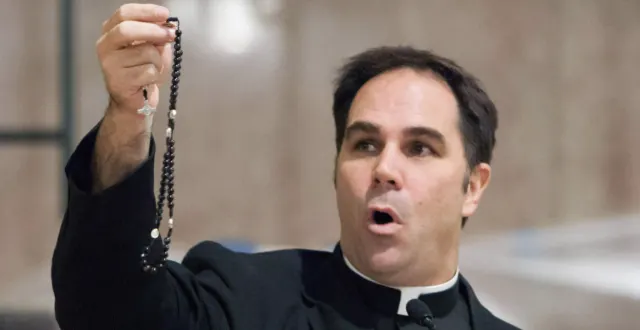
Calloway was a drug addict. Then he found the Rosary
George Kommattam - October 2026
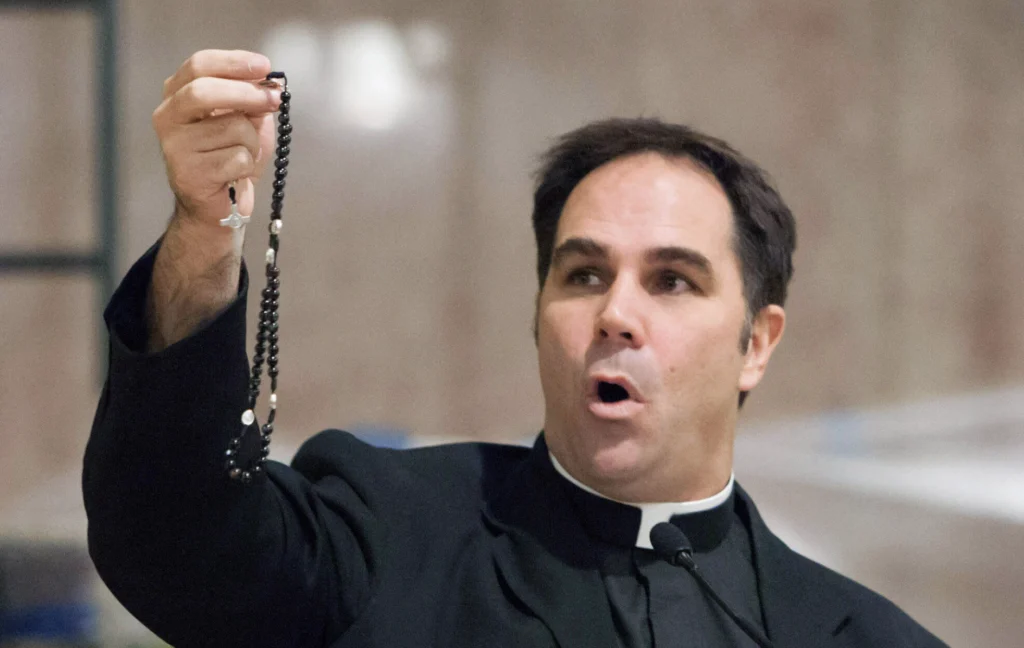
At nearly 21, Donald Calloway was alone at his parents’ home.
For once, there were no drugs, no parties, no music and no friends around to distract him. Instead, he found himself facing something he had spent years running from: the darkness inside him.
His thoughts turned to suicide.
Looking for something- anything - to take his mind elsewhere, Calloway reached for a random book on his parents’ bookshelf.
It was about Marian apparitions.
He knew almost nothing about the Catholic faith. His parents had converted to Catholicism, but he had rejected religion altogether. Yet as he began reading about the Blessed Virgin Mary, something unexpected happened.
He could not put the book down.
“I stayed up all night and read that book,” he later recalled.
For the teenager who had been consumed by drugs, alcohol, crime and a relentless pursuit of pleasure, the story of Mary opened a door he had never expected to walk through.
That night became the beginning of a remarkable journey.
Calloway's troubled years had begun early. After moving with his mother and stepfather to Southern California at age 10, he became increasingly drawn to friends, drugs, drinking and a life centred on immediate pleasure. By his teenage years, he was deeply involved in that world.
A move to Japan made things worse.
There, his friendships eventually connected him with members of the yakuza, a Japanese organized crime network. He carried drugs and money to casinos until Japanese and American authorities caught up with him. He was expelled from Japan and placed in a rehabilitation programme.
But sobriety did not last.
He relapsed soon after leaving.
Then came the night he picked up that book.
Calloway later believed that Mary's beauty and the message of the book had given him a way out at a moment when he was dangerously close to giving up.
The next morning, his mother realized something extraordinary had happened. She contacted priests, and Calloway went looking for one.
He arrived at a chapel looking, by his own description, like a troubled young man with long hair and an unkempt appearance.
The priest welcomed him.
He invited Calloway to Mass and gave him a picture of Jesus, a crucifix and an image of the pope.
Calloway went home and began throwing away reminders of his former life.
But conversion did not mean forgetting the past.
He struggled with guilt and the memories of what he had done. His parents forgave him, but they also told him that he needed to forgive himself.
“If God and my parents could forgive me, then I could forgive myself,” he later said.
Six months after reading that book, Calloway entered the Catholic Church.
And then came the Rosary.
Mary had brought him to Jesus, and the Rosary became an important part of his new life of faith. When he later began considering religious life, he deliberately looked for communities connected with Mary.
He eventually entered the Congregation of Marian Fathers of the Immaculate Conception and, years later, was ordained a Catholic priest.
The transformation was so dramatic that some of his former friends thought he had lost his mind. Others simply disappeared from his life.
Calloway was suddenly alone again — but this time, he was moving in a completely different direction.
Today, he is known internationally for his promotion of the Rosary and his book Champions of the Rosary.
His story carries a message particularly relevant to young people: a life can look completely broken and still change direction.
Calloway himself believes that young people need time to step away from distractions and ask deeper questions about their lives.
“We are not just some cosmic glob that came together for no purpose,” he once said. “There is meaning for this life.”
For someone who once believed he had no way forward, the journey began with something remarkably simple.
A book.
A young man who was searching.
And, eventually, a Rosary in his hands.

Send your feedback to : onlinekeralacatholic@gmail.com