Why the Catholic Church does not ordain women?
George Kommattam - September 2026
The question often comes quietly, but it carries considerable weight:
Why does the Catholic Church not ordain women as priests?
For many Catholics and for those who look to the Church from outside, the answer can be difficult to understand. The question is often framed in terms of equality, changing times and the growing role of women in every sphere of life.
But the Catholic Church approaches the question from a different starting point.
For the Church, priestly ordination is not simply a role that can be opened or closed according to changing circumstances. It is a sacrament received from Christ. And the Church teaches that she does not have the authority to alter what Christ instituted.
A teaching the Church considers definitive
In 1994, Pope St. John Paul II addressed the question directly in his apostolic letter Ordinatio Sacerdotalis.
He wrote that priestly ordination had, from the beginning, been reserved to men and declared that “the Church has no authority whatsoever to confer priestly ordination on women.” He added that this judgment was to be definitively held by the faithful.
The Congregation for the Doctrine of the Faith subsequently explained that this teaching belongs to the deposit of faith and requires definitive assent.
The Church therefore does not understand the question of women priests as a matter of discipline that a future pope could simply change.
But why?
The answer takes us back to Jesus.
The choice Jesus made
Jesus did many things that challenged the expectations of his time.
He spoke publicly with women. He welcomed those whom society rejected. He allowed women to accompany him and learn from him. And after his Resurrection, he appeared first to Mary Magdalene and entrusted her with announcing the news to the apostles.
The dignity Jesus gave to women was remarkable.
And yet, when he chose the Twelve Apostles, he chose men.
The Church sees this not as an accidental reflection of the culture of the first century, but as a deliberate choice made by Christ.
This is at the heart of the Church's understanding of priesthood.
The question, therefore, is not simply, “Why can't women do what men do?”
It is, rather, “What did Christ entrust to the sacrament of Holy Orders, and what authority has the Church received to preserve it?”
The Catholic answer is that the Church has received the sacrament; she has not received the authority to redefine it.
Priesthood is not a measure of dignity
This teaching does not mean that women have a lesser place in the Church.
In fact, the Church explicitly teaches the opposite.
In Ordinatio Sacerdotalis, Pope John Paul II affirmed that the presence and role of women in the life and mission of the Church are “absolutely necessary and irreplaceable.”
The history of Christianity makes this visible.
From Mary, the Mother of God, to Mary Magdalene, from the great women saints and mystics to mothers, religious sisters, missionaries, teachers and countless laywomen, women have shaped the life of the Church in ways that cannot be measured by ordination.
The Church does not teach that holiness depends on becoming a priest.
Priesthood is a particular sacramental vocation. Holiness is the vocation of every Christian.
The meaning of priesthood
Catholic theology understands the priesthood not simply as a position of authority, but as a sacramental participation in the ministry of Christ.
The priest acts in persona Christi — in the person of Christ — particularly in the celebration of the Eucharist.
The Church therefore sees a sacramental connection between Christ the Bridegroom and the Church, his Bride. This understanding is part of the theological reasoning behind the Church's teaching that priestly ordination is reserved to men.
This is not a judgment about the abilities, intelligence or dignity of women.
It is a claim about the nature of a sacrament.
That distinction is essential to understanding the Catholic position.
What about women deacons?
The question of women and the diaconate requires a separate distinction.
The Catholic Church's teaching on the ordination of women to the priesthood is definitive. The Church teaches that she has no authority to confer priestly ordination on women.
The question of the diaconate, however, has remained the subject of historical and theological study.
In December 2025, the Vatican published the findings of the second commission established to study the possibility of admitting women to the diaconate.
The commission concluded that the current state of historical research and theological investigation rules out moving in the direction of admitting women to the diaconate understood as a degree of the sacrament of Holy Orders.
At the same time, the commission made an important qualification: its assessment does not at present permit a definitive judgment to be formulated, as is the case with priestly ordination.
This distinction matters.
The Church has definitively taught that women cannot be ordained priests. The question of women deacons has not received that same definitive judgment.
The distinction also reflects the Church's willingness to continue studying questions where historical evidence and theological interpretation require further examination.
Women and the life of the Church
The question of ordination should not obscure the much larger reality of women's contribution to the Church.
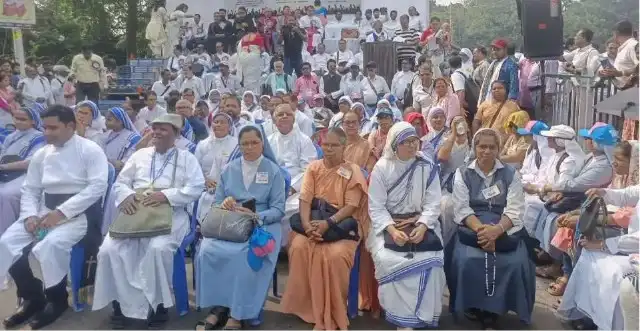
Women have served the Church as saints, theologians, missionaries, educators, founders of religious congregations, catechists, mothers and leaders of countless works of charity and evangelisation.
The Church's history cannot be told without them.
St. Teresa of Ávila, St. Catherine of Siena, St. Thérèse of Lisieux and countless other women have profoundly influenced Catholic spirituality and theology without receiving priestly ordination.
Their lives illustrate an important point: in Catholic Christianity, sacramental ordination is not the measure of a person's importance before God.
The call to holiness belongs equally to men and women.
A different understanding of equality
Much of the modern discussion begins with an understandable assumption: if men and women have equal dignity, they should have identical roles.
Catholic theology begins elsewhere.
Men and women possess equal human dignity and share equally in the call to holiness. But equality, in the Church's understanding, does not require every vocation or ministry to be identical.
The Church understands different vocations as different ways of participating in the one mission of Christ.
That is why the question of women and priesthood cannot be answered simply by asking whether women are capable of exercising the responsibilities associated with priests.
The Church's answer is that priesthood is not merely a responsibility or professional function. It is a sacramental vocation whose form she believes she received from Christ.
And therefore, she does not consider herself free to change it.
The question beneath the question
Perhaps the deepest question is not whether the Church will eventually change her teaching.
It is whether the Church believes she has the authority to do so.
For priestly ordination, her answer has been clear: no.
That answer is rooted in Scripture, apostolic Tradition and the constant teaching of the Church.
At the same time, the Church continues to reflect on how the gifts, leadership and service of women can be more fully recognised in her life.
The conversation about women and the Church therefore cannot be reduced to the question of ordination.
It is also a conversation about vocation, holiness, service and the different ways men and women participate in the mission of Christ.
For Catholics, the central principle remains simple:
The Church does not redesign what she believes she has received from Christ. She receives it, preserves it and seeks to live it faithfully.
And in that understanding, the question of women and priesthood is not ultimately a question about the worth of women.
It is a question about what the Church believes Christ entrusted to her - and about her responsibility to remain faithful to that gift.
(Source: SouthernCross)
Send your feedback to : onlinekeralacatholic@gmail.com